The Torment of Arias : The Photography of Jean Jacques André by Christopher John Ball

Tweet
Jean Jacques André was born in 1932 and raised in Marseille, France by his grandparents and an aunt. His guardians insisted that it would be an educational experience for him to regularly attend the opera from the age of seven. This he describes as a nightmare with his “only reward following the torment of arias and high vocals emanating from large breasted divas was the ballet.” It was whilst watching the delicate creatures dancing in the ballet that his first revelations of woman’s beauty began. Even for one so young the experience had a profound effect. It was an epiphany “beautiful, graceful creatures, unreachable angels floating in space in a magic setting of lights and music! I was in love with all of them.”
The arts run deep through the André family blood-line and the Symbolist paintings produced by his father profoundly influenced the style of Jean’s photography. Symbolism in many ways was a part of the Romantic Movement. Romanticism was a reaction to and a representation of a crisis in the European spirit. Sir Isaiah Berlin described it as “a shift in consciousness” that moved away from the belief in the power of human reason to solve all problems. The essence of the new order, in artistic terms, was the emphasis on, and the primacy of, imagination. Artists who identified with this movement included Munch, Klimt and the young Picasso and out of this grew Modernism.
His house was filled with his father’s canvases depicting nymphs and satyrs – his father having been inspired by the poets Villion, Goethe and of course Shakespeare. “He used unique settings from Greek mythology, medieval castles to romantic scenes where the nude is ever present, all in a dazzling harmony and mastery of colour... Those impressions have stayed with me throughout my life” From the age of 12 Jean knew that he wanted to become a painter like his father “I still do.”
At fourteen his passion for nature drew Jean to the South of France to explore the caves and abysses in that region. “There I could find some of the dramatic tableaux and lighting effects which left such a deep impression earlier. Old castles, Roman ruins, canyons and tormented landscapes, I loved these strange mysterious, out-of-the-ordinary places.”
A little later Jean was introduced to photography and the magic of the darkroom. This was for him “…the start of photography in its most elemental approach… black and white photography, darkroom “magic” and my imagination opened the door to what was to become a life-long dedication.” Before this would happen, Jean’s life would take another fortuitous turn when, in 1951 at the age of 19, he emigrated to Canada with a friend. Here he found “a new country that was to be very good to me.”It was whilst in Canada that Jean began photographing the human figure. In typical romantic tradition – his first model became his wife who “…to this day has been my greatest companion, inspiration, critique, and artist herself, helping to stimulate the creative process.”
Even though Jean felt that, “There is no other aspect of photography that represents such a unique personal interpretation as depicting the female nude,” he soon hit upon what was, for him, a creative problem. “…the nude alone was not satisfying to me. I felt it had no great artistic value by itself, but could be used in the context of a sketch or reference to be developed later into a composition with more depth and meaning.”
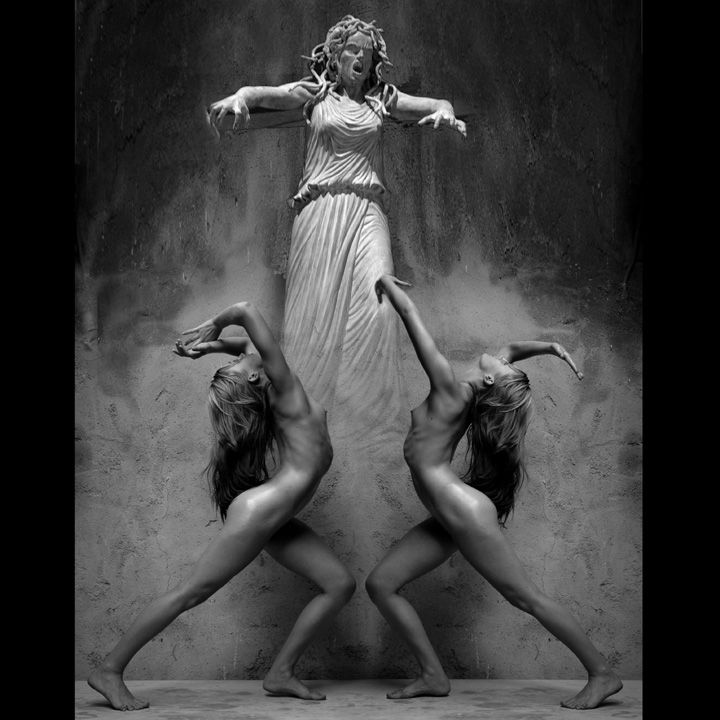
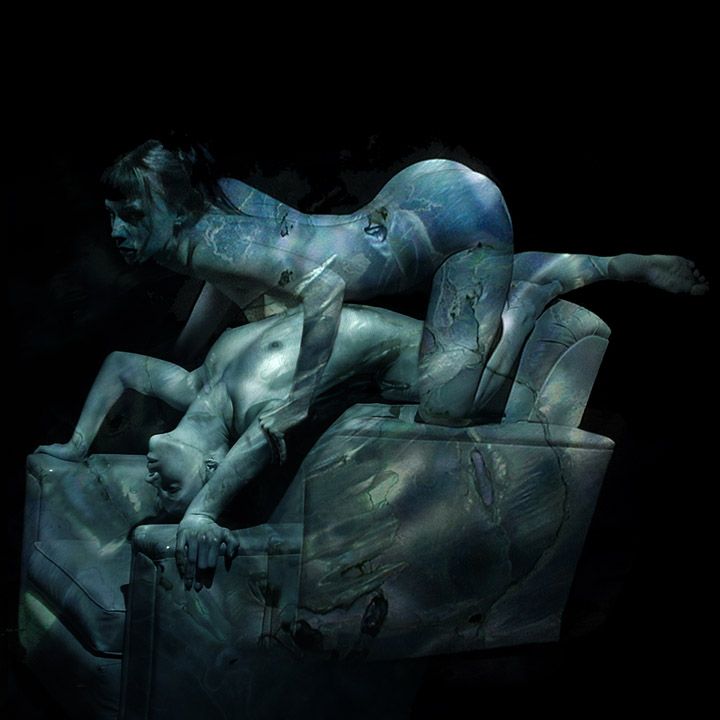
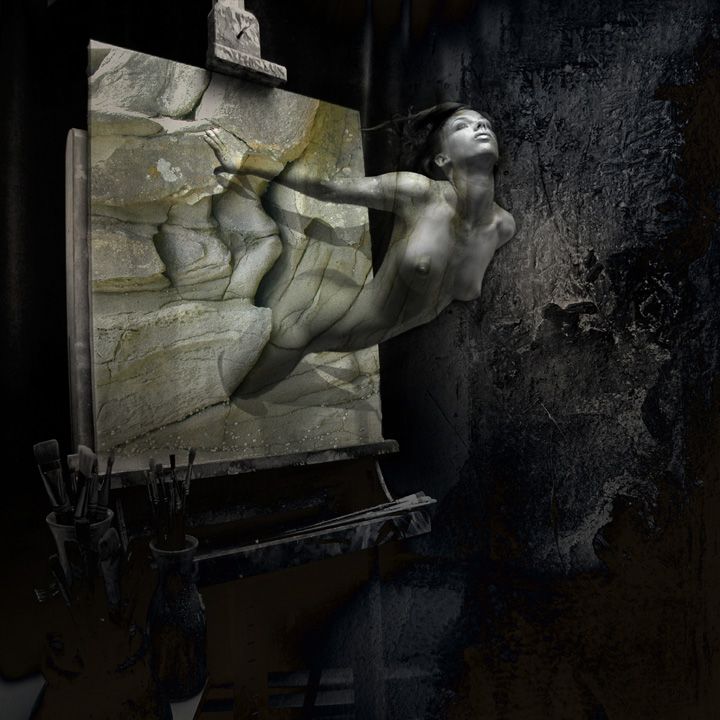
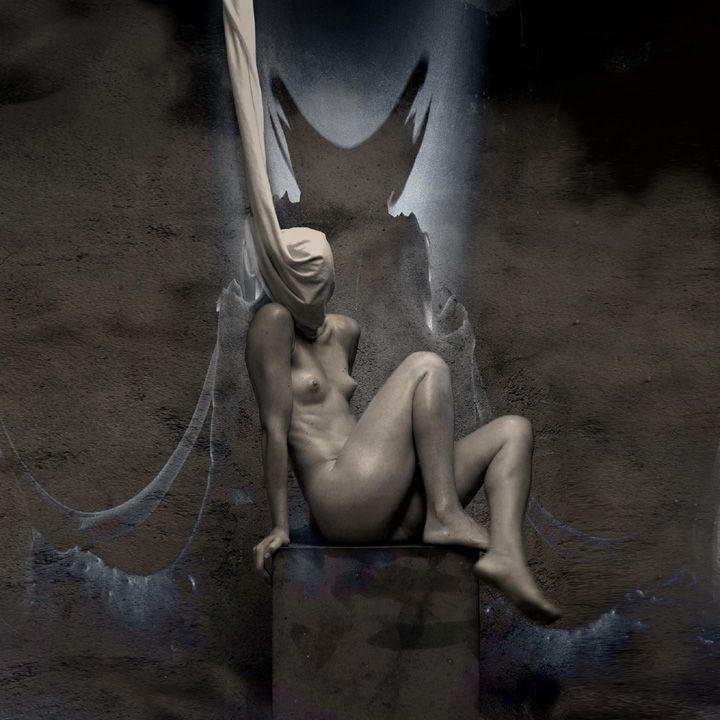
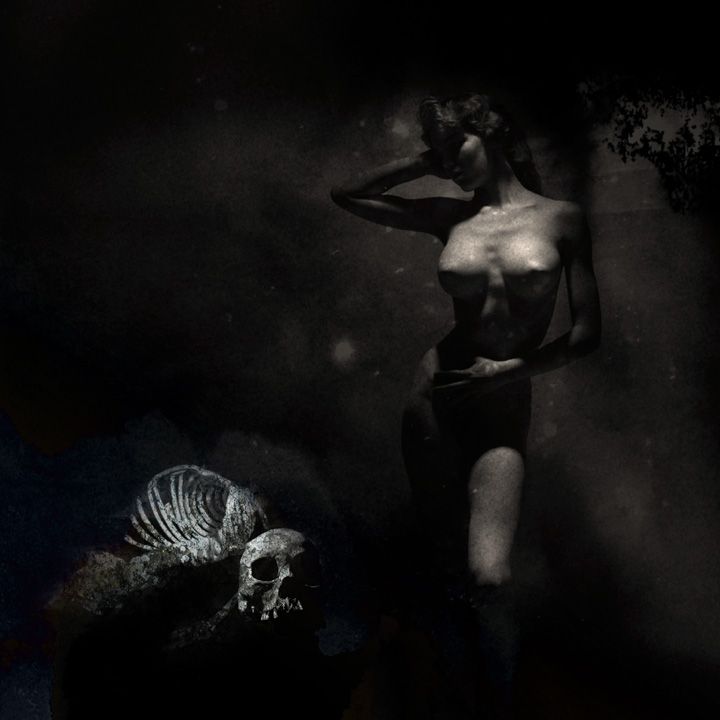
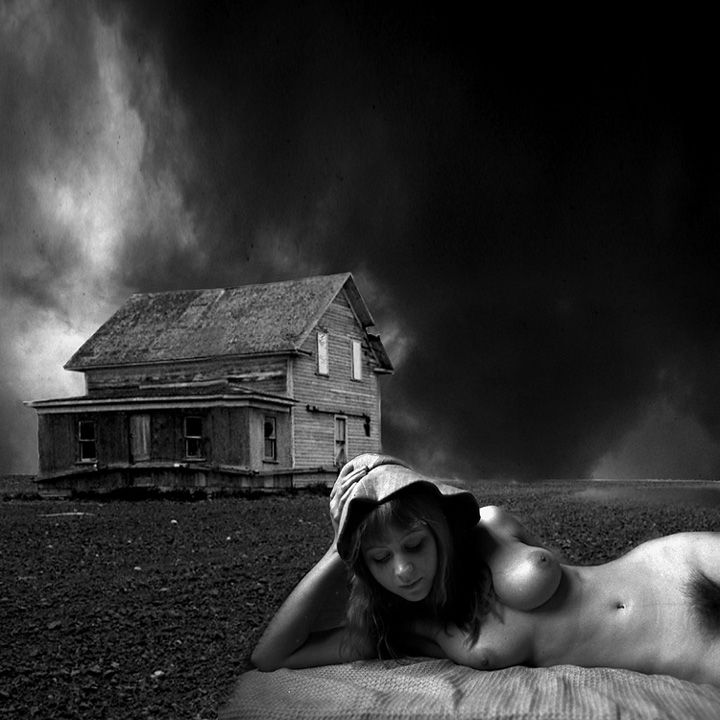
He found the answer by utilizing the “sketch or reference” of the nudes he made to “Idealise the female figure, to show it at its peak of performance, youthful beauty and action,” as components in the creation of photomontages. In the 1980s Jean traveled widely making images of extraordinary landscapes in such places as the Arctic, Israel, the Caribbean, China, Canada and the USA. These landscapes were made in the Romantic style intending to inspire a Kantian sense of awe and the sublime within the viewer. Many of these landscapes were then used as backdrops within his photomontages. This method of working“…allowed the creation of unknown worlds, mysterious surroundings, and dreamscapes, an open field to creativity with no end in sight… And, if at times my damsels in distress are chained or tormented, I am here to rescue them, to take them back to that world of imagination where they belong, in their immortal youth and beauty.”
If one were to attempt to describe the photographs that Jean creates it would be in terms of a fusion of the images produced by Angus McBean (his theatrical photomontages), Ralph Gibson (particularly his ‘The Somnambulist’ 1970 era) and of course the aforementioned Symbolist artists such as Gustave Moreau, Rodolphe Bresdin and Fernand Khnopff.
The photographs range from simple compositions such as the ‘Mirror’ series to the more complex examples of photomontage that can be found in ‘Ulysses and the sirens.’ Images such as ‘Obsession’ are painterly in look and feel - perhaps confirming the influence the Symbolist paintings that his father produced have had upon him. Jean’s choice of models reflects his experiences at the ballet as a child and seems perfect for the roles he has cast for them to play out before his camera.
Though written in 1741 the Swiss critic Bodmer could have been describing Jean’s photographs when he wrote “Imagination outstrips all the worlds magicians: it not only places the real before our eyes in a vivid image and makes distant things present, but also, with a power more potent than that of magic, it draws that which does not exist out of the state of potentiality, gives it a semblance of reality, and makes us see, feel and hear these new creations.”
Given the painstakingly labour intensive working methods Jean has used to produce his images - how does he feel about the arrival of the digital medium and software options open to the photographer today? “Half a century after I began my first montage the use of film and silver images is fading away, while the digital era opens a new beginning, another dimension with new tools. It is a gateway to an even greater challenge of creativity, with so much still to do, to learn, to celebrate.”
In addition to his photography Jean is a conceptual designer and he is an inspiration to many others in his field. He is internationally acclaimed as a leader in museum and multi-media design and his work can be seen in over 70 museums around the world.
Jean is still open-minded, young at heart and ever eager to learn new methods in the production of his playful and poetic imagery. Time shows no signs of dulling Jean’s enthusiasm for creating his worlds populated by diaphanous nymphs, within sublime worlds, awaiting their knight in shining armour. If he has any regrets it could be that “One lifetime is simply not enough!”
Images (c) Jean Jacques André
Words (c) Christopher John Ball
July 2024 Several books, featuring Christopher John Ball's photographs, are now available through Amazon or click on an image below to purchase via secure payments on lulu.com
Tweet